
Why TPEE Is Becoming a Next-Generation Shoe Sole Material
2026-07-26
What Makes a Professional TPEE Manufacturer? A Guide for Global Buyers
2026-08-20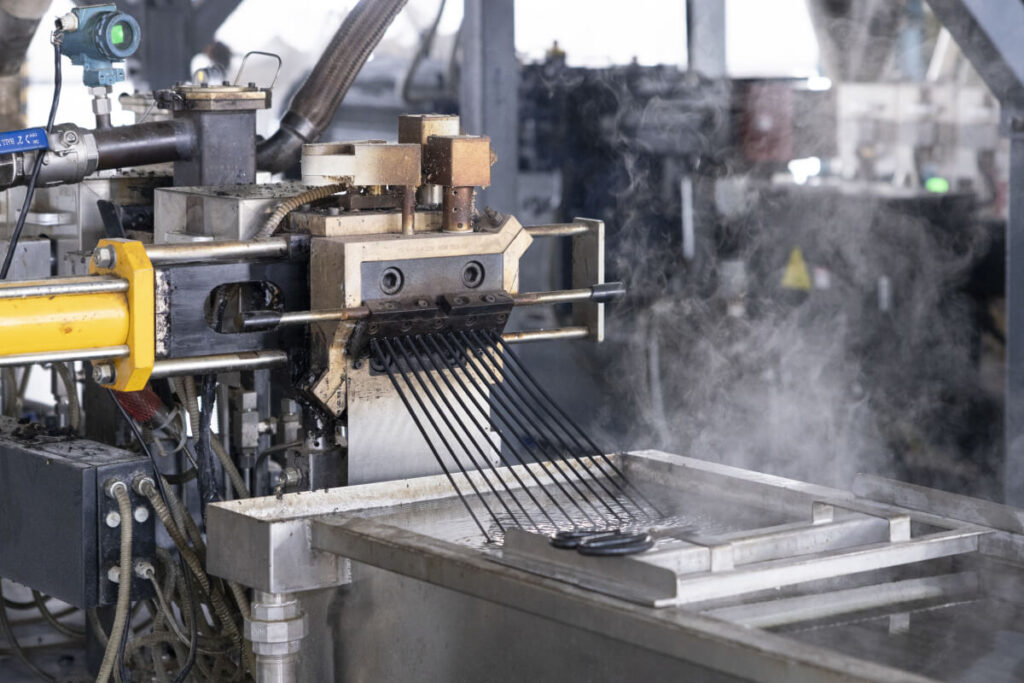
How to Choose a Reliable TPEE Manufacturer: A Practical Guide for Global Buyers
When sourcing Thermoplastic Polyester Elastomer (TPEE), choosing the right manufacturer is about more than comparing material prices. For manufacturers, procurement engineers, distributors, and product developers, the right TPEE supplier can directly affect product performance, production efficiency, quality consistency, supply stability, and long-term costs.
A reliable TPEE manufacturer should be able to provide more than standard polymer grades. The supplier should understand application requirements, provide consistent material properties, support material selection and processing, offer customization when necessary, and maintain a stable global supply chain.
For buyers evaluating TPEE suppliers, this guide explains the key factors to consider and how Hetroflex TPEE approaches material manufacturing, customization, quality consistency, and global customer support.
What Is TPEE?
TPEE, or Thermoplastic Polyester Elastomer, is a high-performance thermoplastic elastomer that combines the flexibility and elasticity of rubber with the processing advantages of thermoplastics.
Its unique structure consists of hard and soft segments. The hard segments contribute to mechanical strength, stiffness, and thermal performance, while the soft segments provide flexibility and elasticity.
Unlike conventional thermoset rubber, TPEE can be processed using thermoplastic manufacturing technologies such as injection molding, extrusion, and blow molding.
Depending on the grade and formulation, TPEE can provide a combination of:
- High mechanical strength
- Excellent fatigue resistance
- Good elastic recovery
- Heat resistance
- Low-temperature flexibility
- Chemical and oil resistance
- Abrasion resistance
- Creep resistance
- Hydrolysis resistance
- Good processing performance
These characteristics make TPEE suitable for demanding applications in automotive, industrial, electrical and electronic, consumer, outdoor, and other industries.
However, not every TPEE grade is suitable for every application. This is why selecting the right manufacturer and material grade is critical.
Why Choosing the Right TPEE Manufacturer Matters
A TPEE material supplier is not simply a source of polymer pellets.
For many manufacturers, changing an elastomer supplier can require mold testing, process optimization, product validation, and sometimes customer requalification. If material properties fluctuate between batches, the resulting production problems can be much more expensive than the original material price difference.
A capable TPEE manufacturer should therefore provide support across several areas:
- Material consistency
- Application-specific grade selection
- Processing support
- Customized material development
- Quality management
- Production capacity
- Supply chain reliability
- Technical communication
- Sustainability options
- Long-term cooperation
The following factors can help buyers evaluate potential TPEE suppliers.
1. Evaluate the Manufacturer’s TPEE Product Portfolio
The first question is whether the supplier has a sufficiently broad product portfolio.
Different applications require different combinations of hardness, flexibility, temperature resistance, chemical resistance, processing characteristics, and mechanical performance.
For example, automotive blow-molded components may require a different TPEE grade from cable sheathing, industrial seals, or breathable membranes.
A manufacturer with multiple specialized TPEE product families can often provide a better starting point for material selection.
The Hetroflex TPEE portfolio currently includes several product series, including:
- BT Series – designed for blow molding applications such as CVJ boots and automotive air ducts
- C Series – polycarbonate-based TPEE for applications such as insulated wires and hoses
- H Series – general-purpose TPEE for injection molding and extrusion
- R Series – recycled-material solutions
- MV Series – TPEE membrane materials for breathable outdoor fabrics and construction applications
- Bio Series – bio-based TPEE solutions
This portfolio allows customers to evaluate different material technologies according to their application requirements rather than relying on a single general-purpose grade.
2. Check Application Experience, Not Just Material Data
A technical datasheet is important, but it does not tell the entire story.
A reliable TPEE manufacturer should understand how its materials perform in real-world applications.
For example, automotive components may experience repeated flexing, temperature fluctuations, exposure to oil or chemicals, vibration, and long-term mechanical stress.
For cable applications, flexibility, abrasion resistance, electrical properties, thermal performance, and environmental durability may become more important.
For outdoor fabrics, waterproofing, breathability, flexibility, UV resistance, and recyclability may be key considerations.
Hetroflex TPEE has developed materials for applications including automotive CVJ boots, air ducts, cable sheathing, insulated wires, hoses, railway components, antenna components, eyewear components, outdoor fabrics, and construction membranes.
This application-oriented approach can help buyers select materials according to the actual requirements of their products.
3. Examine Manufacturing Process and Quality Consistency
For industrial buyers, consistency is often more important than simply achieving a high specification.
A TPEE manufacturer should have reliable control over polymerization and production parameters.
According to Hetroflex, its TPEE production uses a continuous polymerization process supported by DCS management, online viscosity monitoring, automated feed-ratio control, and process control.
The company identifies several advantages of its continuous process, including:
- Precise composition control
- Consistent viscosity
- Low acid value
- Reduced thermal history
- Improved heat resistance
- More consistent product quality
For manufacturers purchasing TPEE on a recurring basis, these process-control capabilities can be important because consistent raw material performance helps reduce production fluctuations.
When evaluating a supplier, buyers should therefore ask:
- How is batch-to-batch consistency controlled?
- What process parameters are monitored?
- How is viscosity controlled?
- What quality tests are performed?
- How are production deviations handled?
- Can the supplier provide technical documentation and test reports?
4. Consider Production Capacity and Supply Stability
A supplier may offer an excellent material but still become a poor long-term partner if it cannot support your production volume.
This is especially important for OEMs, automotive suppliers, distributors, and manufacturers with rapidly increasing demand.
Hetroflex currently states an annual TPEE production capacity of approximately 20,000 tons and has announced plans to expand capacity to 50,000 tons. The company also reports serving more than 500 customers.
For international buyers, supply capability should be evaluated together with logistics.
Hetroflex reports service capabilities in multiple global markets, including warehousing facilities in Japan and South Korea and cooperation with international logistics providers.
When evaluating a TPEE supplier, consider:
- Current annual production capacity
- Available inventory
- Lead time
- Minimum order quantity
- Production scalability
- Warehouse locations
- Export experience
- Logistics support
- Emergency supply capabilities
A supplier capable of supporting both sample-stage demand and future mass production can reduce the risk of changing suppliers later.
5. Ask Whether the Manufacturer Provides Customized TPEE Solutions
Standard grades are sufficient for many applications, but not every product can be optimized using an off-the-shelf material.
Some applications require a specific combination of:
- Hardness
- Elasticity
- Melt flow behavior
- Processing temperature
- Chemical resistance
- Fatigue resistance
- Low-temperature performance
- Heat resistance
- Surface characteristics
This is where customized TPEE development becomes valuable.
Hetroflex provides customized material solutions and has developed application-specific products based on customer requirements. For example, the company has developed ultra-soft TPEE grades such as H20DMG and H20DLG with a hardness of Shore D 20.
It has also worked on customized TPEE 3D air-fiber mattress structural applications.
For manufacturers developing a new product, a TPEE supplier capable of modifying material properties can become a technical development partner rather than simply a raw-material vendor.
6. Evaluate Technical Support for Material Processing
Material selection and processing are closely connected.
Even a high-performance TPEE can produce inconsistent results if drying, melt temperature, mold temperature, residence time, injection conditions, extrusion conditions, or other parameters are not properly controlled.
A professional TPEE manufacturer should be able to provide guidance regarding:
- Injection molding
- Extrusion
- Blow molding
- Material drying
- Processing temperature
- Mold conditions
- Grade selection
- Troubleshooting
- Product testing
For manufacturers moving from conventional rubber or another thermoplastic elastomer to TPEE, technical support can significantly reduce development time.
This is particularly important for applications such as automotive CVJ boots, air ducts, cable sheathing, hoses, and industrial components.
7. Look Beyond Price: Compare Total Material Value
Price per kilogram is only one part of the purchasing decision.
A lower-cost TPEE grade may not necessarily result in a lower total manufacturing cost if it causes:
- Higher scrap rates
- Longer cycle times
- More processing problems
- Shorter component service life
- Increased maintenance
- More frequent material changes
- Additional testing or validation
Instead of comparing only the purchase price, manufacturers should evaluate the total value delivered by the material.
A useful comparison can include:
Material cost + processing efficiency + scrap rate + product performance + service life + technical support + logistics cost
This broader evaluation is especially important for automotive and industrial applications where material failure can have significant downstream costs.
8. Review Quality and Certification Capabilities
Quality management is another important consideration when choosing a TPEE manufacturer.
Manufacturers serving automotive and industrial customers should be able to demonstrate an established quality-management system and appropriate industry experience.
Hetroflex states that it obtained IATF 16949 and ISO 14001 certifications in 2016.
For procurement teams, it is still important to request the supplier’s current certification documents, product specifications, test reports, and quality-control procedures during the qualification process.
Depending on the application, buyers may also need to evaluate:
- Material test reports
- Regulatory compliance
- Environmental requirements
- Flame-retardant requirements
- Chemical resistance data
- Thermal performance
- Mechanical properties
- Application-specific validation
The exact requirements should always be confirmed for the target market and end-use application.
9. Consider Sustainability and Recycled TPEE Options
Sustainability is increasingly becoming part of material-selection decisions.
Because TPEE is thermoplastic, processing scrap can potentially be reground and reused under appropriate manufacturing conditions.
Hetroflex states that its TPEE materials can allow processing scrap to be reground and blended with virgin polymer.
The company also offers recycled and bio-based material solutions through its R and Bio series.
For manufacturers working toward lower material waste or sustainability targets, it can be useful to ask a supplier:
- Can production scrap be recycled?
- Are recycled TPEE grades available?
- Are bio-based options available?
- What percentage of recycled or bio-based content is possible?
- How does sustainability affect mechanical performance?
- Can the supplier provide relevant supporting data?
Sustainability should be evaluated together with performance and application requirements rather than treated as a standalone purchasing criterion.
10. Assess the Supplier’s Global Service Capability
For international customers, technical capability is only one part of supplier selection.
A global TPEE supplier should also understand international logistics, documentation, communication, lead times, and regional customer requirements.
This is particularly important for multinational manufacturers and distributors that need stable supply across different countries.
Hetroflex states that it provides worldwide service capabilities and maintains warehousing support in Japan and South Korea.
For global procurement teams, it is useful to evaluate:
- Export experience
- Regional warehousing
- Delivery lead times
- Logistics partners
- Technical communication
- Documentation support
- After-sales service
- Ability to support multiple production locations
TPEE Manufacturer Evaluation Checklist
Before selecting a TPEE supplier, procurement engineers and manufacturers can use the following checklist:
| Evaluation Factor | Key Question |
|---|---|
| Product portfolio | Does the supplier offer grades for your application? |
| Material consistency | How is batch-to-batch consistency controlled? |
| Application experience | Has the supplier worked with similar products? |
| Processing support | Can the supplier assist with injection, extrusion, or blow molding? |
| Customization | Can material properties be adjusted for special requirements? |
| Production capacity | Can the supplier support future volume growth? |
| Quality management | Can the supplier provide certifications and test data? |
| Supply chain | Can the supplier provide stable international delivery? |
| Sustainability | Are recycled or bio-based TPEE options available? |
| Technical service | Can engineers communicate directly with the supplier’s technical team? |
Why Consider Hetroflex TPEE?
For companies looking for a long-term TPEE manufacturer, Hetroflex combines material manufacturing, application development, customization, and international supply capabilities.
The company’s current capabilities include:
- TPEE production capacity of approximately 20,000 tons per year
- A stated customer base of more than 500 companies
- Multiple TPEE product series
- Continuous polymerization technology
- Application-specific material development
- Customized TPEE solutions
- Japan and South Korea warehousing support
- Recycled and bio-based TPEE options
Its product portfolio covers applications ranging from automotive components and cable materials to industrial products, outdoor fabrics, and construction membranes.
For manufacturers, distributors, and procurement engineers, this broader capability can make the supplier evaluation process more efficient because material selection, customization, production, and supply support can be addressed through one TPEE partner.
How to Choose the Right TPEE Grade for Your Product
Before contacting a TPEE manufacturer, prepare as much application information as possible.
A supplier can make a more accurate recommendation if you provide:
- Target application
- Manufacturing process
- Required hardness
- Operating temperature range
- Chemical or oil exposure
- Required flexibility or elasticity
- Mechanical requirements
- Expected service life
- Annual consumption
- Current material and its problems
For example, an automotive CVJ boot manufacturer should provide information about temperature, flexing cycles, chemical exposure, dimensions, processing method, and performance targets.
A cable manufacturer may instead prioritize thermal performance, electrical properties, flexibility, flame resistance, and extrusion behavior.
The more complete the technical requirements, the easier it is for the TPEE supplier to recommend or develop the appropriate grade.
Frequently Asked Questions About TPEE Manufacturers
What is a TPEE manufacturer?
A TPEE manufacturer produces Thermoplastic Polyester Elastomer materials and develops different grades for applications such as automotive components, cables, industrial parts, membranes, and consumer products.
What should I look for in a TPEE supplier?
Key factors include product portfolio, material consistency, technical expertise, customization capabilities, production capacity, quality management, logistics, sustainability, and application experience.
Can TPEE be customized?
Yes. TPEE properties can be engineered for different applications by adjusting material formulation and grade characteristics. The exact possibilities depend on the target performance requirements and manufacturing process.
What industries use TPEE?
TPEE is used in automotive, electrical and electronics, cable, industrial equipment, consumer products, outdoor textiles, construction, and other applications requiring a combination of flexibility, strength, durability, and processing efficiency.
Is TPEE recyclable?
TPEE is a thermoplastic elastomer, meaning appropriate production scrap can potentially be reground and reused. Recycling performance depends on the material grade, processing history, contamination, and the specific recycling process.
Does Hetroflex TPEE provide customized materials?
Yes. Hetroflex provides customized TPEE solutions for application-specific requirements and has developed customized products including ultra-soft TPEE grades and TPEE 3D air-fiber mattress applications.
Final Thoughts
Choosing a TPEE manufacturer should be treated as a technical and strategic decision rather than simply a price comparison.
The right supplier should be able to provide consistent material quality, application expertise, technical support, customization capabilities, scalable production, and reliable international supply.
For manufacturers, material distributors, procurement engineers, and product developers searching for a long-term TPEE material supplier, evaluating these factors can help reduce material-selection risks and create a more reliable supply chain.
Hetroflex TPEE provides TPEE materials and customized elastomer solutions for customers worldwide, with product technologies covering automotive, cable, industrial, outdoor, construction, and other demanding applications.
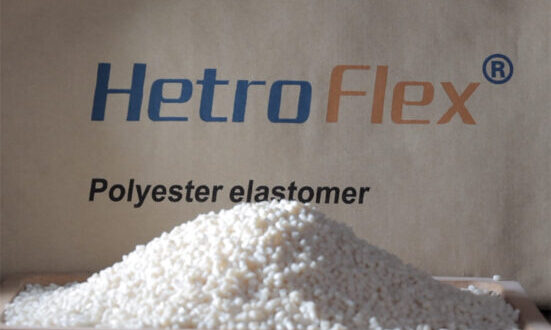
If you are developing a new product or looking to replace an existing elastomer, contact Hetroflex TPEE with your application requirements, processing method, target properties, and expected volume to discuss the appropriate TPEE grade or customized solution.
